
Why Body Doubling Works: The Science Behind ADHD’s Most Surprising Productivity Trick
If you’ve ever found yourself cleaning only when a friend is over or suddenly focusing better when someone else is quietly working nearby, you’ve experienced body doubling. For people with ADHD, this simple strategy can transform overwhelming tasks into achievable ones. But why does having another person in the room make such a difference?
What Body Doubling Is
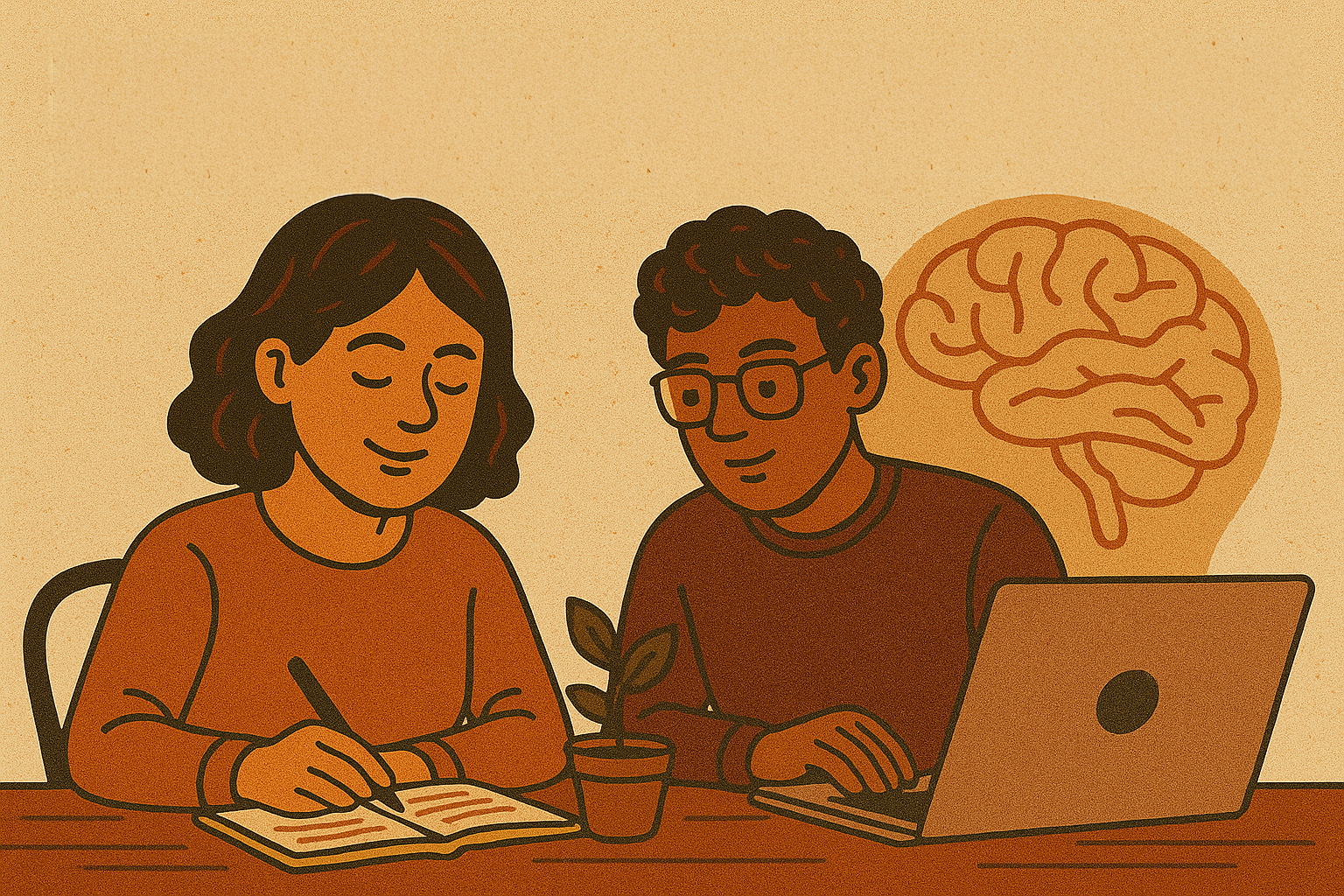
Body doubling means working alongside another person, either in person or virtually, while you each focus on your own tasks. You don’t need them to help you with the work itself. Their presence acts as a steadying force, anchoring your attention and reducing the likelihood of drifting into distractions. The Cleveland Clinic describes it as a form of “external executive function,” almost like borrowing someone else’s focus while you build your own (Cleveland Clinic).
Why It Helps ADHD Brains
ADHD brains often struggle with self-regulation and task initiation. Executive function skills—like starting, prioritizing, and staying on task—can be unreliable. Body doubling works because humans are wired to mirror each other’s behavior. When someone next to you is quietly typing or folding laundry, your brain picks up the social cue to stay engaged. Knowing someone else is present also creates gentle accountability. As Dr. Manos of the Cleveland Clinic explains, the effect can be as subtle as “an administrative assistant who just hangs around all day” reminding you to stay on track (Cleveland Clinic).
The Science of Social Presence
Psychologists have long documented the “social facilitation effect,” where performance improves simply because another person is present. For ADHD, this effect helps bypass the brain’s resistance to starting. Instead of expending all your willpower to initiate a task, the presence of another person lowers the activation barrier. A review from Autism Spectrum News notes that structured social support often serves as scaffolding until individuals internalize their own strategies (Autism Spectrum News).
Real-World Applications
The beauty of body doubling is that it can be adapted to fit different needs:
- Study sessions: Meet a classmate at the library and quietly work in parallel.
- Virtual co-working: Log onto a video call with cameras on, mics off, and each person tackles their own tasks.
- Household chores: Invite a friend over, or even call someone on speakerphone, while you do dishes or laundry.
- Work routines: Join a regular co-working group, in person or online, so the habit becomes part of your weekly rhythm.
Some people also use accountability partners, checking in via text after finishing a task. The principle is the same: another person’s awareness helps anchor your effort.
Where to Start
You don’t need to wait for an official group. Ask a friend to sit with you while you get started on a dreaded task, or try one of the many virtual body doubling communities online. Even public spaces like coffee shops can create a light version of the effect, since being surrounded by others working can nudge you into focus. And if you prefer a digital tool to organize what you’ll tackle during these sessions, an app like Neuralist can help you turn your intentions into a clear plan.
Takeaway: Body doubling works because it taps into our natural responsiveness to social presence. For ADHD brains, it lightens the executive function load, makes starting easier, and builds momentum. It’s a reminder that productivity doesn’t have to be solitary—sometimes, the simple act of not being alone is the most powerful strategy of all.